
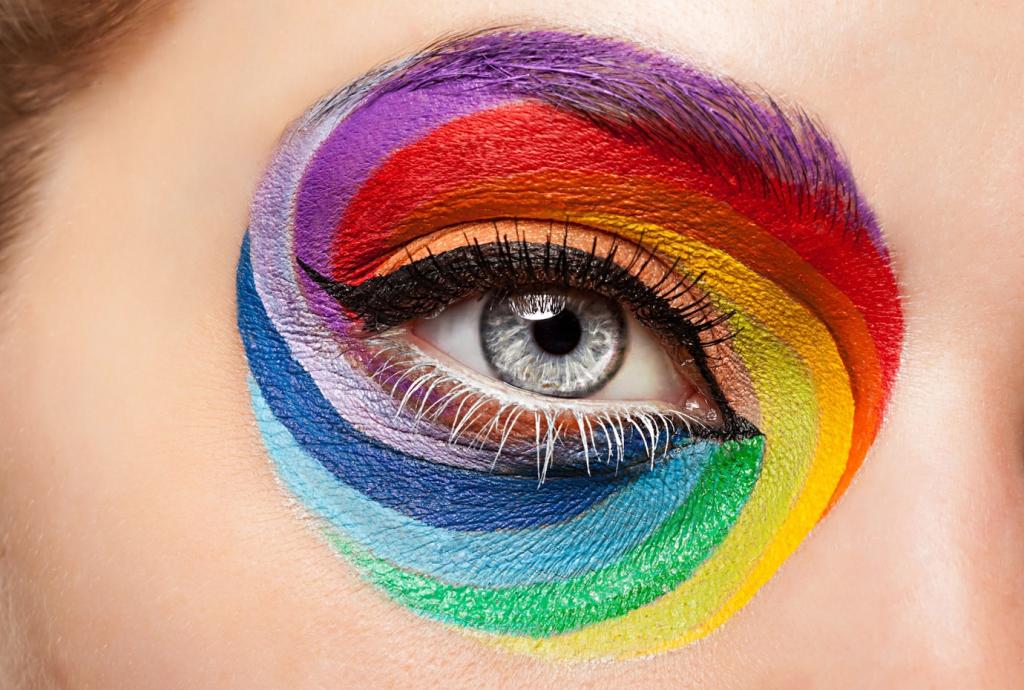
The Role of Color in Visual Storytelling

Chosen theme: The Role of Color in Visual Storytelling. Step into a world where hues carry secrets, palettes whisper subtext, and every tint nudges the heart toward meaning. Explore how color anchors emotion, builds character, and guides the eye. Share your favorite color-driven scenes with us and subscribe for ongoing inspiration.

Why Color Drives Story: A Primer

Light, Wavelength, and Emotional Memory

Our brains bind color to memory through emotion; a flash of crimson can recall danger before a character speaks. Understanding wavelengths is practical storytelling, not physics trivia. What single color instantly transports you to a specific scene or mood? Share your story below.

Cultural Codes and Shifting Meanings

White can signal purity in one culture and mourning in another; green might promise growth or envy depending on context. Great storytellers research codes, then adapt them thoughtfully. Which cultural color code has surprised you lately? Drop an example we should analyze together.

Palette as Narrative Spine

A consistent, evolving palette anchors the viewer. When a story’s stakes escalate, saturation and contrast can climb with them. Sketch your narrative spine first, then map colors to beats. Want a template for this process? Comment “palette map” and we will send a simple worksheet.

Mood and Atmosphere Through Palettes

Warm colors nudge intimacy, comfort, or urgency; cool palettes create distance, clarity, or melancholy. Mix them to stage emotional contrasts within a single frame. Which temperature best captures your current project’s heart? Tell us and tag a scene you love for reference.

Color and Character: Building Identity Through Hues

Assign a dominant hue with two supporting accents for clarity. Let the antagonist echo the protagonist’s hue with a corrupted twist, signaling mirrored desires. Have you tried complementary tension between rivals? Describe your pairing and why it sharpens their conflict emotionally.

Color and Character: Building Identity Through Hues

Show growth by gradually warming a cold palette, or signal corruption by contaminating bright hues with gray. The audience feels change before they name it. What small color adjustment could mark your character’s mid-point crisis? Share your idea and we will brainstorm refinements.

Color and Character: Building Identity Through Hues

In ensemble stories, build a chord of hues where each character occupies a distinct note. Keep harmony in group scenes, then let dissonance announce clashes. Which ensemble palette has impressed you recently? Recommend a scene so everyone can study the group dynamics together.

Comics, Illustration, and Games: Readability Meets Emotion

Flat color accelerates reading and supports clean silhouettes; gradients add atmosphere and volume but risk muddying focal points. Decide panel by panel. Where do you place gradients without sacrificing clarity? Describe your rule of thumb so others can adapt it effectively.

Comics, Illustration, and Games: Readability Meets Emotion

In games, color teaches systems: green affirms, yellow cautions, red warns. Keep UI hues consistent with in-world lighting to avoid dissonance. What feedback color saved your tutorial from confusion? Share your metric, like completion rates, to help others iterate smarter.

Comics, Illustration, and Games: Readability Meets Emotion

Web-format comics rely on vertical pacing. Use repeating color motifs as visual drumbeats, then surprise with a break in palette to signal twists. Have you used a long monochrome stretch before a reveal? Post an example and describe the audience reaction you observed.

Comics, Illustration, and Games: Readability Meets Emotion

Lorem ipsum dolor sit amet, consectetur adipiscing elit. Ut elit tellus, luctus nec ullamcorper mattis, pulvinar dapibus leo.


Accessibility, Ethics, and Inclusion in Color Choices

Aim for strong luminance contrast and do not rely on color alone to convey meaning. Test with simulators and follow recognized guidelines. Which tool do you trust for quick checks? Recommend it below to help others deliver inclusive, readable frames without guesswork.

Accessibility, Ethics, and Inclusion in Color Choices

Pair color with icons, patterns, or text labels so information survives grayscale or atypical perception. Red plus triangle warns more reliably than color alone. Where could dual coding rescue a subtle plot clue in your project? Share a frame and we will suggest alternatives.

From Palette to Final Frame: Practical Workflow

01
Start with curated references, then extract dominant hues and values digitally. Limit your working palette to avoid chaos, and name swatches by narrative function. How many colors feel optimal for your scenes? Share your number and why it keeps your storytelling precise.
02
Establish look-up tables early, then grade test shots or panels to validate skin tones, highlights, and shadows. Consistency sells world-building. What LUT or grading approach anchors your project’s identity? Describe your baseline settings so peers can learn from your process.
03
Wardrobe, set design, lighting, and post must share a unified palette plan. Use quick color callouts on storyboards and daily notes. What tool keeps your team synchronized—spreadsheets, swatch libraries, or markup apps? Recommend it so creators here can streamline their color pipeline.
Orcanode
Privacy Overview

This website uses cookies so that we can provide you with the best user experience possible. Cookie information is stored in your browser and performs functions such as recognising you when you return to our website and helping our team to understand which sections of the website you find most interesting and useful.