
Exploring Color Harmony and Contrast

Welcome to our creative hub dedicated to Exploring Color Harmony and Contrast. We celebrate how balanced palettes and striking oppositions shape mood, meaning, and usability. Dive in, test ideas, and join our growing community by sharing your own color stories, questions, and experiments.

Hue, Saturation, and Value Demystified

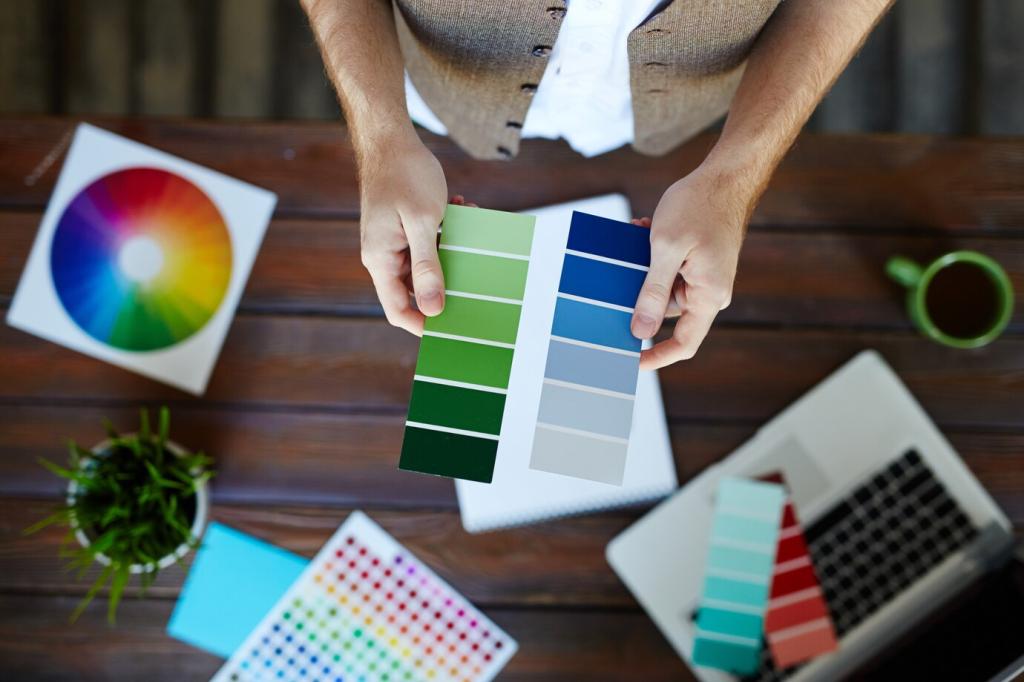
Hue is the color family, saturation is intensity, and value is lightness or darkness. When these three dance in balance, harmony emerges. Try isolating one at a time to see how a tiny shift changes the entire composition and invites clearer, calmer storytelling.

Why Harmony Calms the Eye

Our eyes search for patterns and rhythm. Harmonious palettes offer predictable intervals, creating comfort and trust. Designers often compare them to music, where repeating motifs anchor a melody. Share your favorite harmonious trio and tell us how it changes the mood of your work.

Simple Palettes That Always Work

Analogous palettes whisper serenity, triadic palettes introduce lively equilibrium, and monochromatic schemes give unified control. Each offers harmony through structure rather than sameness. Try building one palette of each and post your results for feedback from fellow readers and color lovers.

The Many Faces of Contrast

Value contrast is the fastest way to create emphasis and readability. A bright subject against a deep field becomes irresistible. Practice by converting your design to grayscale first, then adjust values until your focal point pops. Tell us what changed once you tuned the lights and darks.

The Many Faces of Contrast

Warm colors advance and feel inviting; cool colors recede and feel spacious. Blend them thoughtfully and your layout breathes. A warm call-to-action set against a cool backdrop can feel like a friendly doorway. Share a screenshot where temperature contrast clarified purpose without shouting.
Real-World Story: A Neighborhood Café Finds Its Palette

The café used midtone browns everywhere, from cups to awning, so nothing stood out. Even daily specials seemed invisible. Regulars loved the coffee, but passersby missed the shop completely. The team asked for help to create a palette with personality and legibility on a busy street.

Real-World Story: A Neighborhood Café Finds Its Palette

We chose a deep teal as the primary and a warm terracotta as its complementary accent, then softened transitions with oatmeal neutrals. Value contrast carried headlines, while temperature contrast warmed the brand voice. The result felt cozy yet contemporary, like a welcoming hug with clear direction.

Cultural and Psychological Nuances of Color

Red can signal celebration in some cultures and warning in others. A harmonious red-gold pairing may feel festive in one context yet formal elsewhere. Research your audience, then prototype variations. Tell us about a time cultural nuance changed your palette decisions for the better.

Cultural and Psychological Nuances of Color

Readable contrast is caring design. Aim for at least 4.5:1 for normal text and 3:1 for large text to meet common accessibility guidelines. Test states like hover and focus, too. Share your favorite method for measuring contrast and help our readers make inclusive color choices today.
Pick just two colors and craft a poster or cover. Use value steps, scale, and spacing to build hierarchy without adding hues. This constraint reveals how contrast, not quantity, shapes clarity. Share your two-color triumphs and tell us which decisions were hardest to make.

Practical Exercises to Train Your Eye

Choosing Palettes with Purpose
Explore palette generators to start, then refine manually using HSL adjustments for precise control over harmony and contrast. Document why each color exists. Purpose beats novelty every time. Share your process notes so others can learn how you translate intention into dependable palettes.
Testing Contrast Quickly
Use contrast checkers, grayscale previews, and print tests on plain paper. Verify states like disabled, error, and success. Harmony should survive across light and dark modes. Post your checklist template and invite feedback from readers who have different workflows and industries.
Naming and Token Systems That Scale
Name colors by role, not whim: text-primary, surface-elevated, accent-urgent. Create semantic tokens that safeguard harmony and enforce contrast in code and brand guides. Share a snippet from your system and explain how it improved collaboration between designers, developers, and stakeholders.

Join the Conversation: Your Harmony and Contrast Lab

Weekly Palette Prompt

Every Friday we post a mood prompt to explore harmony and contrast from new angles. Interpret it in any medium and tag your work. Subscribe to get the prompt in your inbox and motivate a consistent creative practice that grows your color confidence.

Before-and-After Thread

Show an early version and a refined version where harmony and contrast improved clarity. Explain your decisions, and ask for targeted feedback. Others learn from your process, and you gain fresh perspectives. Add your story and support fellow makers with constructive insights.

Subscriber Sketchbook

Sign up to access downloadable worksheets, palette templates, and critique sessions focused on harmony and contrast. We showcase standout experiments monthly. Join in, share your progress, and help shape the next set of resources this community needs most.
Orcanode
Privacy Overview

This website uses cookies so that we can provide you with the best user experience possible. Cookie information is stored in your browser and performs functions such as recognising you when you return to our website and helping our team to understand which sections of the website you find most interesting and useful.